
This page is also available in
 Polski
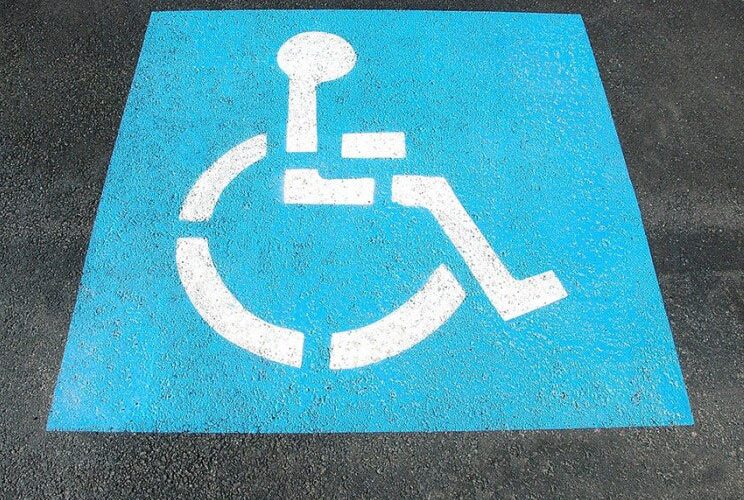
These are people who: cannot see, have poor vision, cannot hear, have poor hearing, have reduced intellectual ability, are motorically impaired, or are chronically ill. Although the term “DIFFERENTLY ABLED” seems more accurate, factual, and “fair,” with a positive connotation.
After all, people with paralyzed hands perform all tasks with their feet, in the same way that we, the so-called “healthy” ones, do with our hands. And the blind can move well in the field, study at all types of universities, and perform professions like most of us. The deaf read lips, understand words, gestures, and everything that happens around them. People with motor impairments practice various sports, e.g., fencing, swimming, wheelchair basketball, and also paint and draw with their mouths or toes.
This is, among other things, where their ability lies – differently. Apart from certain health-related deficits, they are full-fledged members of society, having all the rights and needs like any other person. They are few in percentage, but that does not mean they are not among us.
Sometimes we don’t want to or can’t see them around us and show a little kindness, acceptance, and understanding. Sometimes they don’t want to or can’t show or say how much they need the approval of the environment they live in. They need so little – a little interest, a smile, a handshake, a brotherly pat on the shoulder, normal treatment, which they undoubtedly deserve. They need at least a kind word from the world. Father Mieczysław Maliński aptly put it: ” With a kind word, you can live for a moment, a whole day. A kind word can save you in a moment of despair.
It is difficult to live without a kind word. You can live long with a kind word. Therefore, give it to people, because they need human acceptance.”
Acceptance of otherness! It’s so difficult!
Everything that is atypical, deviating from the norm, evokes fear and aversion in many people, a need to escape.
Perhaps it is worth changing this way of thinking and perceiving reality within oneself? Perhaps it is worth starting to be interested in what is a little different, strange? To get closer to what is new – to know more, to feel more, to experience something sublime, fascinating. Just look into the eyes of a child with intellectual disability to see in them the unclouded joy of life.
The directness, the simplicity of childhood that we have already lost, free from deceit and artificiality – it is painted on the faces of these children. But to see it, one must want to look at them with humility, with love. “Differently abled” people – upon closer acquaintance, turn out to be interesting individuals from whom much can be learned. For example, the power of survival, ways of overcoming pain, coping with adversity,
with loneliness, hardening one’s soul, perseverance in pursuing goals, optimism despite suffering, and many other desirable traits for becoming a strong, valuable person. Such people are often outstanding individuals in society. Limited by their disability, enslaved by their illness, they climb upwards in the intellectual and spiritual sphere. V.E. Frankl beautifully described this with the words:
“Like trees in a dense forest, standing close to each other, unable to grow sideways, are forced to grow upwards – so disabled people, from the narrowing and limitation of their abilities, can develop and open upwards…”
So let us allow other people to live their own way, let us allow them to be close to us without fear of being ridiculed, humiliated, or misunderstood. Let us allow them to develop at their own pace, in their own specific way,
but among us, and not far from our world, beyond artificially created boundaries, just to be further away from us.
Have we considered the meaning of the existence of “differently abled” people among us? By looking at them, focusing on their humanity, one can pause for a moment in this race for money, career, and success. One can stop in the rush of human affairs and, bowing over another person, awaken deep reflections to remember what is most important in life. Their presence among us encourages us to reflect on our own lives, on their quality. After all, we, healthy people, desire exactly the same from life as they do. We want someone to love us, take care of us, give us their time and attention. We need another human being most of all.
The presence of disabled people, their lives, and their desires remind us that the most important thing in life is a human being and what is most important to them – love, friendship, family, and the approval of their surroundings.
W. Eichelberger (psychologist, author of popular books) reminds us all that: “The most valuable gift we have to offer others and can be given is – time
and attention.”
I wish all parents and their children much time spent together and attention given and received from others.
photo by pixabay.com